
A Guide to Dealing with Kidney Stones: Causes, Symptoms, and Treatment Options at Hospital CMQ

Piedras en el Riñón: Síntomas, Tratamiento y Cirugía de Excelencia en Hospital CMQ

Medically reviewed by Angel Pozos, MD. Nephrology SpecialistLast reviewed:

Reading time: 2 minutes

About the author: Dr. Angel Pozos, MD, is a renowned nephrologist responsible for the Hemodialysis service at Hospital CMQ Premiere. He completed his specialization in Nephrology at the University of Guadalajara and is certified by the Mexican Council of Nephrology A.C. Dr. Pozos is dedicated to providing exceptional care to patients with kidney diseases, ensuring the highest standards of treatment and compassion. The constant training and participation of Dr. Angel Pozos in different conferences is a symbol of his interest in the latest trends and technology in his area. Some of his services include:

Quick answer

Kidney stones are hard mineral deposits that form inside the kidneys and can cause sudden, severe pain as they move toward the bladder. Many small stones pass on their own with fluids and pain control, but larger stones or ones that block urine flow may need a procedure to remove them.

What Are Kidney Stones?

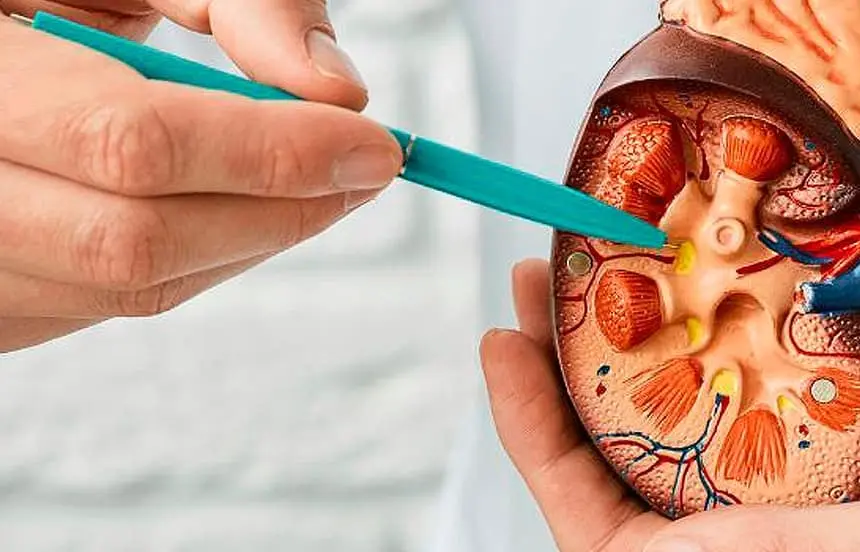
Kidney stones form when minerals and salts in urine — most commonly calcium and oxalate — crystallize and stick together. They range from as small as a grain of sand to as large as a golf ball. Pain typically starts when a stone moves out of the kidney and into the ureter, the narrow tube connecting the kidney to the bladder.

What Are the Symptoms?

  • Sudden, severe pain in the back or side, below the ribs
  • Pain that comes in waves and may radiate to the lower abdomen or groin
  • Pink, red, or brown urine
  • Nausea and vomiting
  • A frequent urge to urinate, or pain during urination
  • Fever and chills, if an infection is present

What Causes Kidney Stones?

  • Not drinking enough fluids
  • A diet high in sodium, animal protein, or oxalate-rich foods
  • Obesity
  • Family or personal history of kidney stones
  • Certain medical conditions, such as gout or hyperparathyroidism

How Are Kidney Stones Diagnosed?

A CT scan of the abdomen and pelvis is the most reliable way to locate a stone and determine its size, and ultrasound is sometimes used as a first step, especially to limit radiation exposure. Urine and blood tests help identify what the stone is made of and whether an infection is present.

How Are Kidney Stones Treated?

  • Small stones: increased fluids, pain management, and sometimes medication to help the stone pass naturally
  • Larger stones: shock wave lithotripsy (breaking the stone into smaller pieces from outside the body)
  • Ureteroscopy: a thin scope removes or breaks up the stone directly
  • Percutaneous surgery: used for very large stones, through a small incision in the back

Everything in One Place

A stone that's causing severe pain or blocking urine flow needs imaging, lab work, and — if necessary — a same-day procedure. Hospital CMQ coordinates emergency evaluation, urology, and imaging under one roof so treatment isn't delayed.

When Should I Go to the Emergency Room?

Seek urgent care if pain is unbearable, if you have a fever with pain (a possible sign of infection behind a blocked kidney), or if you can't keep fluids down.

Sudden back or side pain? Our urology team can evaluate and treat kidney stones the same day.

Prevention

  • Drink enough water to keep urine pale yellow throughout the day
  • Reduce sodium and limit foods very high in oxalate if you're prone to stones
  • Ask your doctor whether a 24-hour urine test could help identify your specific risk factors

References

  • National Institute of Diabetes and Digestive and Kidney Diseases (NIH) — Kidney stones
  • Mayo Clinic — Kidney stones overview
  • American Urological Association — Kidney stone guidelines

Dr Angel Pozos, Specialist in Nephrology

Angel Pozos

Hospital CMQ Health Provider

Dr. Angel Pozos, MD, is a renowned nephrologist responsible for the Hemodialysis service at Hospital CMQ Premiere. He completed his specialization in Nephrology at the University of Guadalajara and is certified by the Mexican Council of Nephrology A.C. Dr. Pozos is dedicated to providing exceptional care to patients with kidney diseases, ensuring the highest standards of treatment and compassion.

The constant training and participation of Dr. Angel Pozos in different conferences is a symbol of his interest in the latest trends and technology in his area. Some of his services include:

  • Hemodialysis 
  • Chronic Kidney Failure 
  • Acute Kidney Injury 
  • Kidney Transplant
  • Renal Hypertension

To contact Dr. Pozos, please call Hospital CMQ Premiere at 322 226 6500 for more information and available times. Book your appointment now with Dr. Angel Pozos, the best kidney care in Puerto Vallarta!

Read more

Meet our Team

Frequently asked questions

How long does it take to pass a kidney stone?

Small stones often pass within one to three weeks, though this varies depending on size and location.

Are kidney stones more common in men or women?

They occur in both, though historically more common in men — though the gap has been narrowing with changing diet and lifestyle patterns.

Will I get kidney stones again?

Having one stone increases the risk of future stones, which is why identifying the cause and adjusting diet or fluid intake matters for prevention.

Can kidney stones cause permanent kidney damage?

Most stones resolve without lasting harm, but a stone that blocks urine flow for a prolonged period can affect kidney function, which is why timely evaluation matters.

Share this article

Related articles

Type to search the whole site.