
Everything You Need to Know About Hemodialysis Service in Puerto Vallarta

Benefits of Choosing Hospital CMQ Premiere for Hemodialysis

Medically reviewed by Angel Pozos, MD. Nephrology SpecialistLast reviewed:

Reading time: 2 minutes

About the author: Dr. Angel Pozos, MD, is a renowned nephrologist responsible for the Hemodialysis service at Hospital CMQ Premiere. He completed his specialization in Nephrology at the University of Guadalajara and is certified by the Mexican Council of Nephrology A.C. Dr. Pozos is dedicated to providing exceptional care to patients with kidney diseases, ensuring the highest standards of treatment and compassion. The constant training and participation of Dr. Angel Pozos in different conferences is a symbol of his interest in the latest trends and technology in his area. Some of his services include:

Quick answer

Hemodialysis is a treatment that takes over the job of filtering waste and extra fluid from your blood when your kidneys can no longer do it well enough on their own. A typical session lasts three to four hours and is usually needed three times a week. It doesn't cure kidney disease, but it keeps the body in balance and allows people to continue their daily lives.

What Is Hemodialysis?

When kidney function drops below a critical threshold — a stage called kidney failure or end-stage renal disease — waste products and fluid build up in the blood and become dangerous. Hemodialysis uses a machine and a special filter (a dialyzer) to pull blood out of the body, clean it, and return it, doing outside the body what healthy kidneys would normally do inside it.

Who Needs Hemodialysis?

Your doctor may recommend hemodialysis if you have chronic kidney disease that has progressed to kidney failure, or in some cases of sudden (acute) kidney injury. Signs that dialysis may be needed soon include persistent nausea, swelling, shortness of breath, confusion, or lab results showing dangerously high waste levels in the blood.

What Happens Before Treatment Starts?

Before regular hemodialysis begins, a surgeon creates vascular access — most often a fistula or graft in the arm — that allows blood to be drawn safely and efficiently during each session. This is typically arranged several weeks in advance so it has time to heal and mature.

What Happens During a Session?

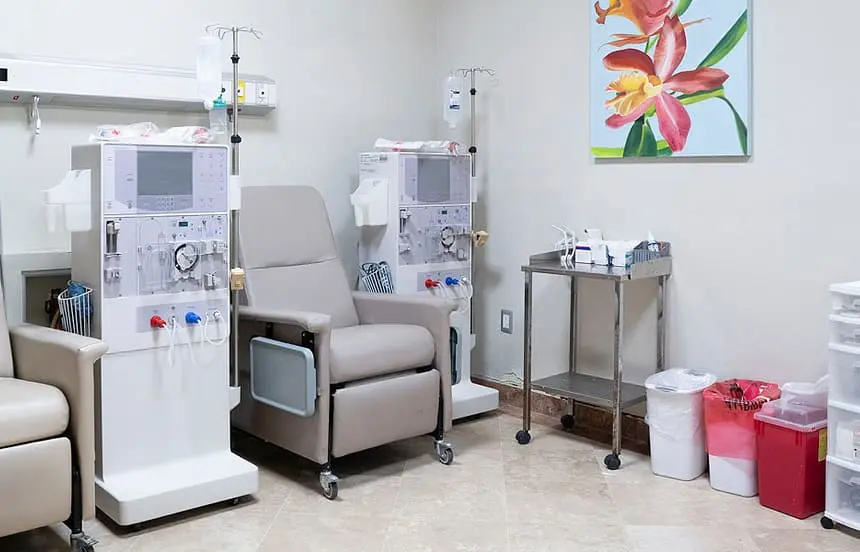
  • Two small needles are placed at the access site, one to draw blood out and one to return it
  • Blood flows through tubing into the dialysis machine, where it passes through the filter
  • Cleaned blood is returned to the body while waste and extra fluid are removed
  • Vital signs are monitored throughout by the nursing team

Most people read, rest, or watch something during treatment. Mild side effects like low blood pressure, cramping, or fatigue afterward are common and usually manageable.

Everything in One Place

Hospital CMQ coordinates the full picture around dialysis: nephrology consultation, vascular access planning with our surgical team, lab monitoring, and a dedicated dialysis unit — so patients don't have to piece together care between different facilities.

Living With Hemodialysis

Diet and fluid intake usually need adjustment, and your care team will help set limits on sodium, potassium, and phosphorus. Many patients continue working and traveling with planning; our team can help coordinate treatment for visitors who need dialysis while in Puerto Vallarta or the Riviera Nayarit.

Ask our nephrology team about starting, transferring, or scheduling a visiting dialysis session.

References

  • National Institute of Diabetes and Digestive and Kidney Diseases (NIDDK/NIH) — Hemodialysis
  • Mayo Clinic — Hemodialysis overview
  • National Kidney Foundation — Understanding dialysis

Dr Angel Pozos, Specialist in Nephrology

Angel Pozos

Hospital CMQ Health Provider

Dr. Angel Pozos, MD, is a renowned nephrologist responsible for the Hemodialysis service at Hospital CMQ Premiere. He completed his specialization in Nephrology at the University of Guadalajara and is certified by the Mexican Council of Nephrology A.C. Dr. Pozos is dedicated to providing exceptional care to patients with kidney diseases, ensuring the highest standards of treatment and compassion.

The constant training and participation of Dr. Angel Pozos in different conferences is a symbol of his interest in the latest trends and technology in his area. Some of his services include:

  • Hemodialysis 
  • Chronic Kidney Failure 
  • Acute Kidney Injury 
  • Kidney Transplant
  • Renal Hypertension

To contact Dr. Pozos, please call Hospital CMQ Premiere at 322 226 6500 for more information and available times. Book your appointment now with Dr. Angel Pozos, the best kidney care in Puerto Vallarta!

Read more

Meet our Team

Dr Angel Pozos, Specialist in Nephrology

Angel Pozos

Hospital CMQ Health Provider

Dr. Angel Pozos, MD, is a renowned nephrologist responsible for the Hemodialysis service at Hospital CMQ Premiere. He completed his specialization in Nephrology at the University of Guadalajara and is certified by the Mexican Council of Nephrology A.C. Dr. Pozos is dedicated to providing exceptional care to patients with kidney diseases, ensuring the highest standards of treatment and compassion.

The constant training and participation of Dr. Angel Pozos in different conferences is a symbol of his interest in the latest trends and technology in his area. Some of his services include:

  • Hemodialysis 
  • Chronic Kidney Failure 
  • Acute Kidney Injury 
  • Kidney Transplant
  • Renal Hypertension

To contact Dr. Pozos, please call Hospital CMQ Premiere at 322 226 6500 for more information and available times. Book your appointment now with Dr. Angel Pozos, the best kidney care in Puerto Vallarta!

Read more

Frequently asked questions

Is hemodialysis permanent?

For chronic kidney failure, it's typically an ongoing treatment unless a kidney transplant becomes possible. For acute kidney injury, it may only be needed temporarily while the kidneys recover.

Does hemodialysis hurt?

Needle placement causes brief discomfort, but the session itself is generally painless. Some patients experience cramping or fatigue afterward.

Can I travel while on dialysis?

Yes, with advance planning. Many dialysis centers, including ours, accommodate visiting patients — just schedule ahead of your trip.

What's the difference between hemodialysis and peritoneal dialysis?

Hemodialysis filters blood through a machine at a clinic (or sometimes at home); peritoneal dialysis uses the lining of your own abdomen and can be done at home daily. Your nephrologist can help you decide which fits your life better.

Share this article

Related articles

Type to search the whole site.